
So now FDA is banning DTE. Drugmakers are accusing compounders of using counterfeit API. Sockpuppet...
Compounders on Capitol Hill was huge. More than 250 compounding professionals attended. Collectively they made almost 200 visits with members of Congress, all in one day. That’s a lot of one-on-one meetings, and it’s such a successful event for explaining your profession and why your patients need compounded drugs.
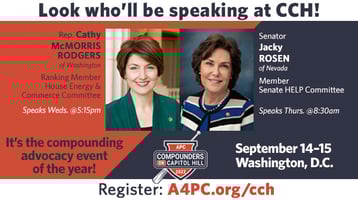
And while the Hill visits were the heart and soul of CCH, a lot more happened in DC. There was our Legal Symposium and reporters roundtable (see below). We had three dozen exhibitors supporting the event. We raised a record-setting amount of money for CompPAC and for two compounding supporters in Congress.
We also had a chance not only to update APC members on all we’ve been working on this year, but to give a peek at some of our plans for 2026. The potential DTE ban is at the top of the list right now, and then there’s our omnibus compounding bill just introduced in Congress. Not to mention our Blueprint for reducing unnecessary regulation, ongoing issues with GLP-1 compounding, drugmaker misinformation, FDA overreach, and more — issues that always seem to be lurking in the background.
Speaking of lurking in the background, as our members headed to Capitol Hill Wednesday, they found this lovely bit of pollution taking up a valuable parking space:
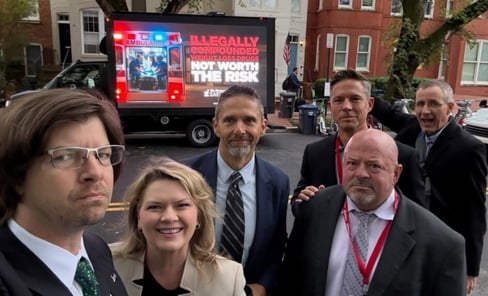
You can’t quite see it, but it’s a typical deeply misleading message from the folks at the drugmaker sockpuppet group “Partnership for Safe Medications.” It says a lot that Big Pharma and its lackeys are willing to spend their money fighting you and your patients with a stunt like this. Classy.
Anyway… back to professional pharmacy. Compounders on Capitol Hill is behind us, but we have a lot in front of us. While we catch our breath, check out what went down at CCH:

Turning up the volume on the DTE campaign. CCH is where we put our campaign to ensure patients’ access to desiccated thyroid hormone into high gear. With the FDA’s decision to ban the use of DTE still ringing in our ears, we made it a priority issue — nay, the priority issue in our meetings with legislators. A lot of them weren’t aware of what happened, and fewer were aware of why it’s an issue. That’s changed now thanks to our congressional visits. With the education done and that foundation in place, we’re going to keep pressing the issue until FDA sees the error of its ways.
(Speaking of which, don’t forget to tell your patients to reach out to Congress and share their testimonials about DTE. Everything they need to make it easy is at compounding.com/thyroid.)
At our Legal Symposium, three separate panels of attorneys broke down the hottest issues shaping pharmacy compounding — from FDA inspections to GLP-1s, telemedicine, and compliance risks. We’ll have all the presentation slides available for download (hopefully by the time you read this), so you can just upload those into ChatGPT and get a great summary of the sessions.
Our favorite factoid:
In recently banning compounding with natural thyroid medications, FDA cites 500 reported patient adverse events associated with the drug SINCE 1968 (!).
By contrast, there have been 47,000 patient-reported adverse events associated with Eli Lilly’s commercially available tirzepatide drug between 2022 and 2024 alone — but FDA has indicated no corresponding concern about that.
Something to think about.
— Stephen Snow, attorney with Bendin Sumrall & Ladner
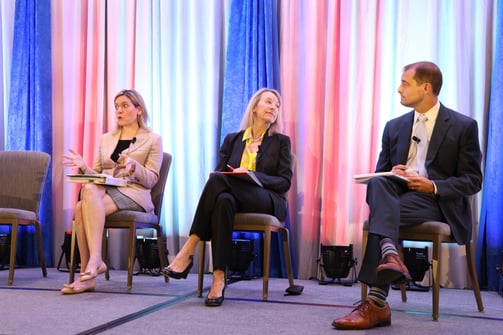
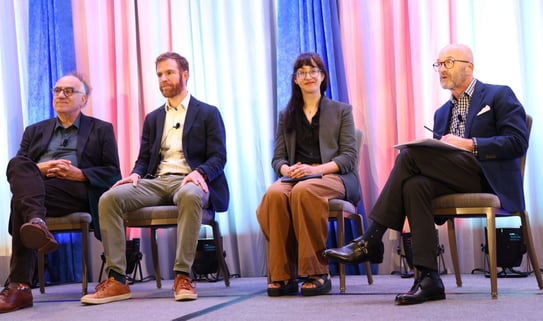
And at our reporter panel, Arthur Allen from KFF Health News, Daniel Gilbert from the Washington Post, and Sydney Lupkin of NPR shared with us their non-pharmacist, expert perspectives on the pharmacy compounding landscape — and gave some insight into their journalistic processes. That was an important perspective to have, considering how crucial reporters’ role is in educating the public (or, when it comes to less-experienced journalists, confusing that public even more).